
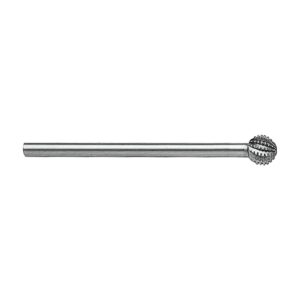
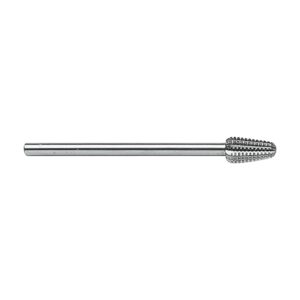
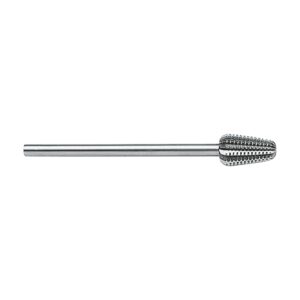
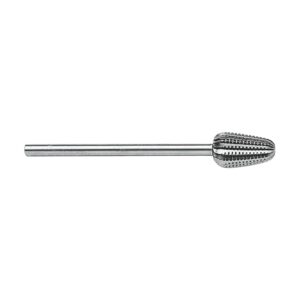
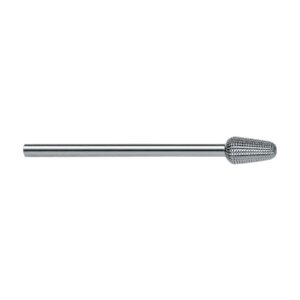
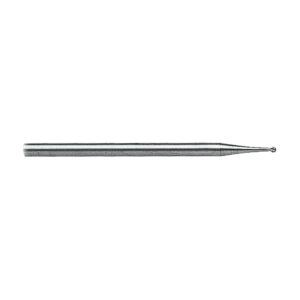
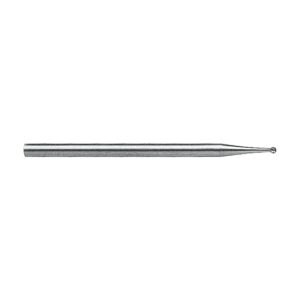
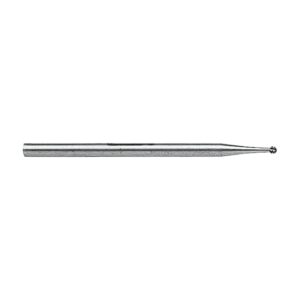
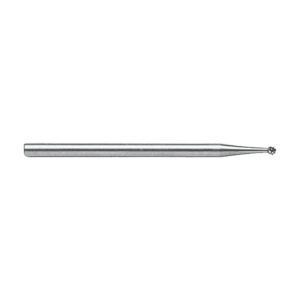
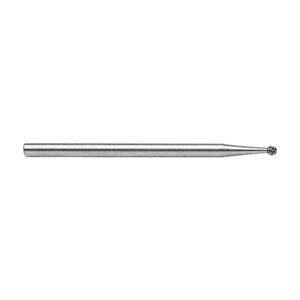
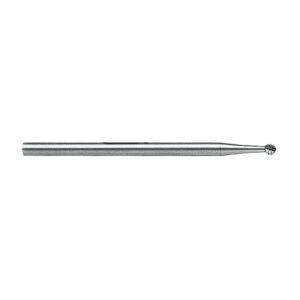
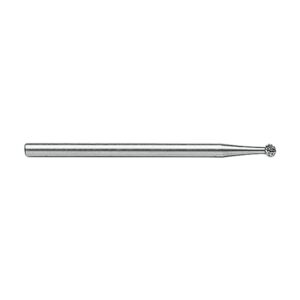
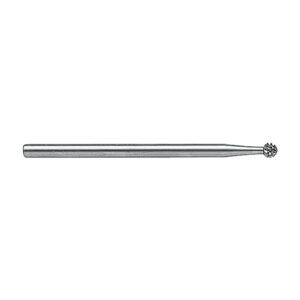
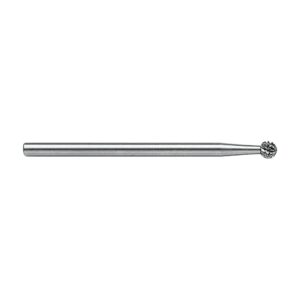
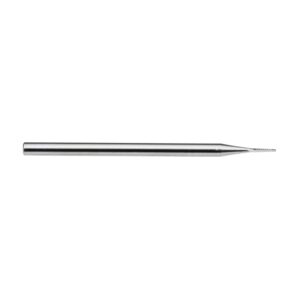
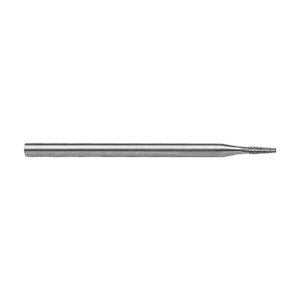
Whether you call them carbide burrs or carbide e-file bits, the principle is the same: they cut instead of grind. That single distinction is what makes hard metal tungsten carbide the material of choice for podiatrists treating the most demanding nail pathologies and for nail technicians working with acrylics, hard gels, and professional nail enhancements. Losayia supplies professional hard metal carbide burrs in Cyprus for podiatrists, nail technicians, and beauty professionals who need maximum cutting performance and zero compromise in their work.
What Are Hard Metal Carbide Burrs?
Hard metal carbide burrs are rotary cutting instruments machined from tungsten carbide — one of the hardest materials used in professional nail and foot care. Unlike diamond or ceramic burrs which grind and abrade in fine increments, carbide burrs slice, shave, and sculpt with deep fluted grooves that throw debris away from the cutting surface instantly. The result is fast, clean material removal with no clogging, no heat build-up, and no loss of performance mid-treatment — whether the material is a thickened nail plate or a thick acrylic overlay.
Think of it the way a woodworker thinks about tools: diamond burrs are the sandpaper — precise, finishing, forgiving. Hard metal carbide burrs are the chisel — powerful, fast, and built for the work that needs to happen first.
Clinical Applications: Podiatry
Rapid Bulk Nail Reduction When a patient presents with severe nail thickening such as onychogryphosis, a carbide cutter slices through the bulk of the nail plate rapidly — removing large volumes of nail material in seconds and making the session efficient for both practitioner and patient.
Treating Fungal Nails Fungal nail tissue becomes soft, chalky, and crumbly — a texture that clogs diamond burrs quickly. Hard metal carbide burrs do not clog. Their open fluted grooves throw fungal debris away from the cutting surface continuously, maintaining full performance throughout the treatment.
Nail Debridement When clearing away dead, infected, or detached nail tissue to allow healthy regrowth, a hard metal burr allows rapid, precise removal of damaged sections — exposing the nail bed cleanly and efficiently.
Cosmetic Applications: Nail Technicians & Beauty Professionals
Removing Acrylics and Hard Gel Extensions Trying to hand-file or soak off thick acrylic overlays, polygel, or hard gel extensions takes time and effort. A coarse or medium carbide bit slices through these synthetic polymers in seconds. Because it removes material by creating shavings rather than fine dust, it keeps the salon air cleaner and does not clog with sticky gel residue.
Debulking and Shaping Extensions When acrylic or builder gel goes on too thick or unevenly near the apex of the nail, a barrel carbide bit rapidly shaves down the excess product — evening out the surface and shaping the structural curve of the artificial nail so it looks sleek and natural.
Backfilling During Fill-Ins After three to four weeks of growth, a gap appears between the cuticle and the old extension. Specialised small carbide bits, tapered barrel or cone shapes, cleanly shave down the ledge where old product meets natural nail, creating a perfectly smooth, flush transition for seamless new product application.
Cleaning Under Nail Extensions As extensions grow out, debris can become trapped under the free edge. A needle-shaped carbide bit gently removes trapped material, smooths uneven product underneath, and leaves the underside of the extension clean and pristine.
Safety Bits: Designed for the Cosmetic Setting
Because cosmetic clients have healthy, sensitive skin around their nails, the industry developed a specific variation called the Safety Bit. Unlike podology bits — which often have active cutting tips designed to work on hard nail pathology — cosmetic carbide barrels feature a completely smooth, rounded top. This allows the nail technician to work right up to the client’s cuticle line to shave down product with no risk of accidentally cutting the skin if their hand slips. Safety bits are the standard choice for any carbide work in a salon or beauty setting.
Diamond vs. Hard Metal: Knowing When to Use Each
Most podologists use both in a single session, and many nail technicians do too — switching between them depending on the stage of the treatment.
Diamond burrs grind, file, and polish. They are forgiving if they contact surrounding skin, making them ideal for finishing work and skin-adjacent procedures.
Hard metal carbide burrs slice, shave, and sculpt. They resist clogging, remove bulk material faster, and maintain cutting performance on the toughest nail tissue and product. In a cosmetic setting, safety bits with rounded tops make carbide work safe to use close to the cuticle.
Podiatry Safety Note
In a clinical podiatry setting, hard metal carbide burrs are for use on the hard nail plate only. Because carbide cutters shave rather than abrade, contact with surrounding soft tissue carries a risk of cutting. Firm grip, controlled technique, and switching to diamond instruments for skin-adjacent work are essential at all times.
Ideal For
Podiatrists treating severe nail thickening, fungal nails, and nail debridement who need a cutting instrument that performs where diamond burrs cannot.
Nail technicians working with acrylics, hard gels, polygel, and nail extensions who need a fast, clean, non-clogging e-file bit that shapes and removes product efficiently.
Beauty professionals offering high-end manicure and pedicure services who want the professional-grade carbide bits used in the best nail studios.
Any professional in Cyprus looking for a reliable local supplier of carbide burrs with consistent stock and full after-sales support from the Losayia team.
Frequently Asked Questions
What is the difference between hard metal carbide burrs and diamond burrs? Diamond burrs grind and abrade in fine increments, making them precise and forgiving — ideal for finishing, skin work, and sensitive procedures. Hard metal carbide burrs slice and shave aggressively, removing bulk material quickly without clogging — making them the tool of choice for bulk nail reduction, fungal nail treatment, acrylic removal, and nail extension shaping. Most professionals use both, switching between them as the treatment progresses.
Are carbide burrs safe to use in a salon setting? Yes, when the correct bit is used. In a cosmetic setting, safety bits with a smooth, rounded top are specifically designed for close cuticle work and eliminate the risk of skin contact during product removal and shaping. Standard carbide bits with active cutting tips are used in podiatry on the nail plate and are not appropriate for general salon use close to soft skin.
Why do carbide burrs not clog on fungal nails or gel products? Hard metal carbide burrs have deep open fluted grooves that continuously throw debris away from the cutting surface during rotation. This self-clearing mechanism keeps the bit performing at full capacity regardless of whether the material being removed is soft fungal nail tissue or sticky gel product.
Are hard metal carbide burrs autoclavable? Yes. Hard metal carbide burrs are compatible with autoclave sterilisation and should be sterilised between every client as part of standard infection control protocol in both clinical and salon settings.