What is Plantar Hyperhidrosis?
Plantar hyperhidrosis is the excessive production of sweat by the eccrine sweat glands of the foot, beyond what is required for thermoregulation. While the foot has the highest density of eccrine sweat glands of any body region — approximately 620 glands per square centimetre — plantar hyperhidrosis produces sweat volumes that significantly exceed functional needs, creating a persistently moist environment that causes physical discomfort, footwear damage, social embarrassment, and clinically significant secondary pathology.
Plantar hyperhidrosis affects an estimated 3% of the population, though the true prevalence is likely higher due to significant underreporting — patients frequently regard the condition as an embarrassing personal problem rather than a treatable medical one. According to the International Hyperhidrosis Society, hyperhidrosis has a profound impact on quality of life, affecting professional, social, and psychological wellbeing in the majority of sufferers who seek treatment.
In the warm climate of Cyprus, where feet are enclosed in footwear for much of the working day and temperatures regularly exceed 35 degrees Celsius, plantar hyperhidrosis is both more prevalent and more symptomatic than in cooler climates. This makes it a clinically relevant condition for Cyprus-based podiatrists who encounter it regularly and need a structured management approach.
The Clinical Consequences of Plantar Hyperhidrosis
Excessive plantar moisture is not merely uncomfortable — it creates a cascade of secondary pathologies that make early professional intervention important.
Maceration and Skin Breakdown
Prolonged moisture exposure causes the stratum corneum to absorb water, swell, and soften — a process called maceration. Macerated skin loses its structural integrity, becomes fragile and friable, and is significantly more susceptible to frictional trauma, blistering, and interdigital skin breakdown.
Tinea Pedis and Onychomycosis
The warm, moist environment created by plantar hyperhidrosis is the optimal growth medium for dermatophyte fungi. Patients with hyperhidrosis have substantially elevated rates of tinea pedis (athlete’s foot) and onychomycosis (nail fungus). Treating the hyperhidrosis is therefore a primary preventive intervention against the secondary fungal complications that frequently present in these patients.
Bromhidrosis
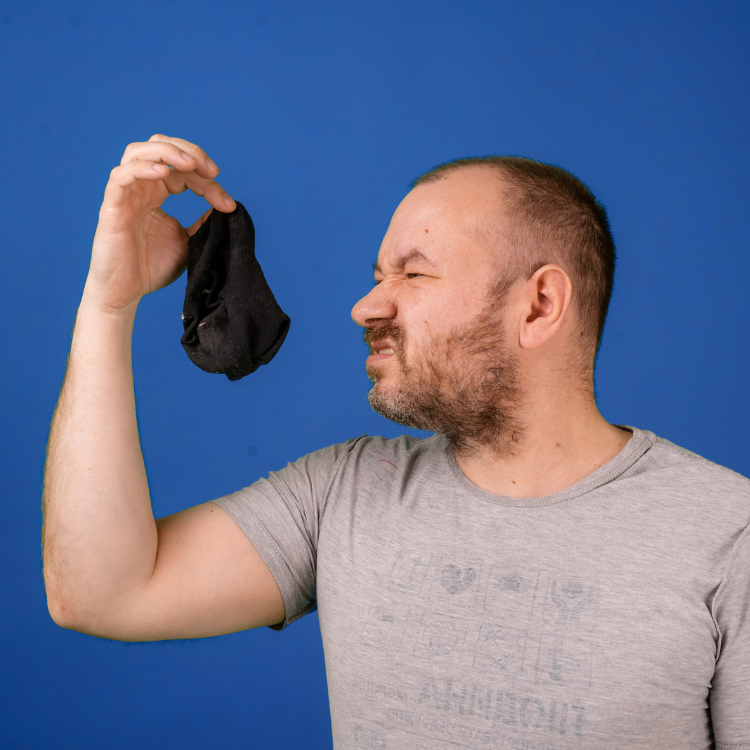
Foot odour associated with hyperhidrosis results from bacterial decomposition of sweat and skin cells in the moist plantar environment. While the sweat itself is odourless, the proliferation of Micrococcus sedentarius and other resident bacteria produces isovaleric acid and other volatile compounds responsible for the characteristic malodour. Bromhidrosis is the secondary condition that most commonly drives patients to seek professional help — which makes it a valuable clinical entry point for addressing the underlying hyperhidrosis.
Contact Dermatitis
Macerating skin in a wet footwear environment increases percutaneous absorption of shoe materials — particularly rubber accelerators, leather tanning agents, and textile dyes — predisposing hyperhidrotic patients to allergic and irritant contact dermatitis of the foot.
Assessment: How Podiatrists Evaluate Plantar Hyperhidrosis
Clinical assessment of plantar hyperhidrosis involves patient history, visual examination, and where indicated, objective measurement of sweat production.
The starch-iodine test provides a simple visual confirmation of excessive sweating. Iodine solution is applied to the dry plantar surface and allowed to dry, then starch powder is dusted over it. In areas of active sweating, the iodine and starch react to form a dark blue-black colour — mapping the distribution and intensity of sweating clearly and reproducibly.
Patient history should cover: onset and duration, trigger factors (heat, anxiety, activity), social and professional impact, previous treatments tried and their outcomes, and any associated conditions (tinea pedis, contact dermatitis, onychomycosis).
The Hyperhidrosis Disease Severity Scale (HDSS) — a validated 4-point patient-reported outcome measure — provides a reproducible assessment of symptom impact that can be used to track treatment response over time.
The Management Pathway
First Line: Conservative and Topical Management
Conservative measures address the immediate environment of the foot and are the foundation of management regardless of severity.
- Footwear: natural leather or mesh uppers, breathable sock materials (merino wool or moisture-wicking synthetic fibres), daily footwear rotation to allow 24 hours drying between uses
- Foot hygiene: twice daily washing with an antibacterial foot wash, thorough drying particularly between the toes
- Foot baths: regular soaking in a professional foot bath with appropriate additives — both for therapeutic effect and for the softening of macerated tissue prior to professional treatment
Professional topical products play a central role in first-line management. The GEHWOL range includes several products specifically indicated for plantar hyperhidrosis and bromhidrosis:
GEHWOL MED Antiperspirant Lotion 125ml — the primary clinical antiperspirant product in the GEHWOL MED range, formulated to reduce eccrine sweat production at the plantar surface. Aluminium-based antiperspirant compounds act by forming a temporary plug in the eccrine duct, physically reducing sweat output at the application site. For patients with moderate to severe plantar hyperhidrosis, this is the most targeted topical intervention available without prescription.
GEHWOL Foot Powder 100g — a talc-based foot powder for daily moisture absorption inside footwear. Applied to the foot and inside the shoe before dressing, foot powder absorbs moisture throughout the day, reducing the maceration effect of sustained plantar sweating and controlling the bacterial environment that generates foot odour.
GEHWOL Foot and Shoe Deodorant 150ml — a deodorant spray for both foot and footwear application, targeting the bacterial bromhidrosis component of hyperhidrosis-related foot odour. Can be used daily inside footwear as part of the patient’s home care routine.
GEHWOL FUSSKRAFT Herbal Spray 150ml — a professional foot spray with essential oil actives delivering deodorising and refreshing action. The spray format allows convenient application throughout the day and is particularly practical for patients who need a midday refresh during long working hours.
GEHWOL Foot Bath 250g — a professional foot bath formulation for regular soaking. Regular foot baths soften macerated plantar tissue for professional treatment, deliver therapeutic active ingredients to the skin surface, and provide a daily hygiene ritual that patients with hyperhidrosis benefit from both clinically and psychologically.
Second Line: Iontophoresis
Iontophoresis uses a low-level electrical current passed through water to temporarily reduce eccrine gland function. It is highly effective for plantar hyperhidrosis — clinical studies report sweat reduction of 80-90% with regular treatment. Initial treatment requires sessions three to four times per week for two to four weeks, followed by maintenance sessions every one to three weeks. Home iontophoresis devices are available for motivated patients who wish to maintain their treatment independently between professional appointments.
Third Line: Botulinum Toxin Injections
Botulinum toxin A injections into the plantar surface temporarily block the cholinergic nerve terminals that stimulate eccrine gland secretion. Clinical duration of effect is typically four to six months. Plantar injections require anaesthesia (nerve block) due to the density of pain receptors in the plantar skin — patient counselling about the procedure is important for managing expectations and ensuring compliance.
Referral Considerations
Podiatrists managing patients with plantar hyperhidrosis should refer to dermatology when: conservative and topical measures have failed to achieve adequate control after a sustained trial, the patient is a candidate for systemic anticholinergic medication, or the presentation suggests a secondary cause (hyperthyroidism, menopause, medication side effect, malignancy) that requires investigation.
Frequently Asked Questions
What causes excessive foot sweating?
Plantar hyperhidrosis has both primary and secondary forms. Primary hyperhidrosis — the most common — is thought to result from overactivity of the sympathetic nervous system driving eccrine gland stimulation beyond thermoregulatory need. Secondary hyperhidrosis has an underlying cause such as hyperthyroidism, menopause, diabetes, or medication side effects. A podiatrist can assess the presentation and refer for investigation of a secondary cause where indicated.
Is excessive foot sweating treatable?
Yes. Plantar hyperhidrosis is a treatable condition with a well-established management pathway. Most patients achieve significant improvement with appropriate topical products, footwear and hygiene modification, and regular professional podiatric treatment. For more severe cases, iontophoresis and botulinum toxin injections provide more substantial control. Podiatrists in Cyprus can assess and manage plantar hyperhidrosis as part of a comprehensive professional foot care service.
Which GEHWOL products help with sweaty feet?
GEHWOL MED Antiperspirant Lotion is the primary clinical product for reducing plantar sweat production. GEHWOL Foot Powder absorbs moisture and controls the environment inside footwear. GEHWOL Foot and Shoe Deodorant addresses the odour component of bromhidrosis. GEHWOL FUSSKRAFT Herbal Spray provides refreshing deodorising action throughout the day. GEHWOL Foot Bath supports the daily hygiene routine. All products are available in Cyprus through Losayia partner pharmacies and professional partners.