A clinical guide for podiatrists, healthcare professionals
Onychomycosis: Why Cyprus Is a High-Risk Environment
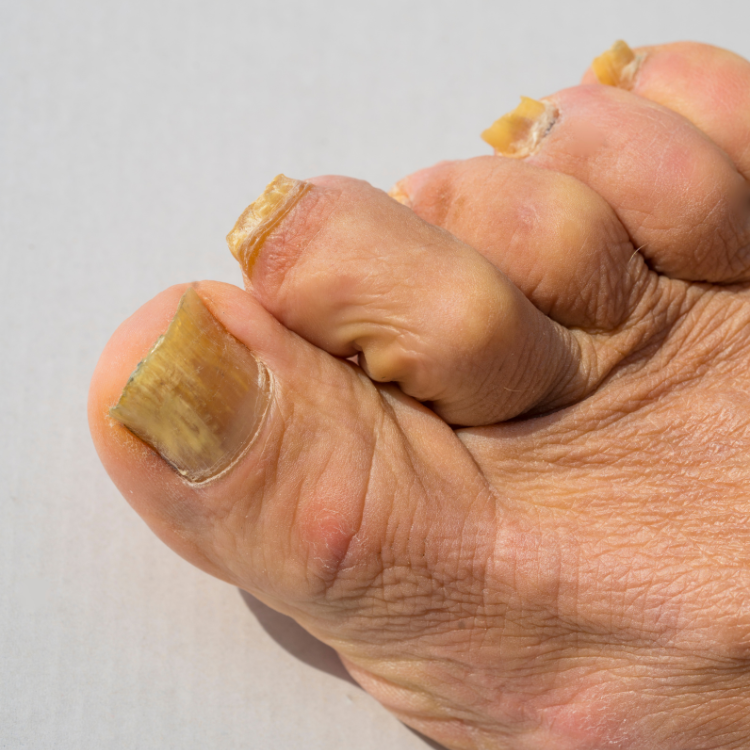
Onychomycosis — fungal infection of the nail plate, nail bed, and surrounding tissue — affects an estimated 10% of the global population. In Mediterranean countries, that figure climbs. The combination of warm climate, widespread barefoot culture at pools and beaches, open footwear for extended periods, and high summer temperatures creates near-ideal conditions for dermatophyte transmission and proliferation. For podiatrists practicing in Cyprus, onychomycosis is not an occasional presentation — it is one of the most consistently encountered conditions across every patient demographic.
The primary causative organism in the Mediterranean region is Trichophyton rubrum, accounting for approximately 70-80% of all dermatophyte nail infections. Trichophyton interdigitale accounts for most of the remainder, with non-dermatophyte moulds and Candida species representing a smaller but clinically significant subset — particularly relevant in immunocompromised patients and those with chronic nail trauma.
According to data published in the Journal of the European Academy of Dermatology and Venereology, onychomycosis prevalence increases significantly with age — affecting approximately 20% of adults over 60 and up to 50% of those over 70. Diabetes, peripheral arterial disease, immunosuppression, and a history of tinea pedis are all independent risk factors for nail infection.
Why Onychomycosis Is Notoriously Difficult to Treat
The nail plate presents a formidable physical barrier to topical treatment. The dense, keratinised structure of the nail limits the penetration of antifungal agents to the nail bed where the living infection resides. Most topical antifungal lacquers achieve nail plate penetration rates of less than 10% — sufficient for superficial white onychomycosis but inadequate for the more common distal subungual presentations where the infection begins beneath the free edge and progresses proximally.
Recurrence rates compound the difficulty. Even when treatment achieves apparent clinical cure, the environmental reservoir — shared showers, pool surrounds, contaminated footwear — remains. Without concurrent treatment of tinea pedis and patient education about reinfection prevention, relapse within 12 months is common.
The Professional Treatment Ladder for Onychomycosis
A structured treatment approach based on severity, causative organism, and patient risk factors gives the best clinical outcomes. The following ladder represents current best practice for the professional management of onychomycosis in a podiatric setting.
Step 1: Clinical Assessment and Differential Diagnosis
Not every dystrophic nail is fungal. Psoriasis, trauma, lichen planus, and chronic paronychia can all produce nail changes that mimic onychomycosis. Where clinical uncertainty exists, mycological confirmation before committing to a long treatment course avoids the patient frustration of treatment failure in a non-fungal case. Assessment should include documentation of nail involvement pattern, calculation of the Onychomycosis Severity Index (OSI) score, and evaluation of patient-specific risk factors.
Step 2: Mechanical Nail Reduction
Professional mechanical reduction of the infected nail plate — using diamond grinders, hard metal carbide burrs, and appropriate rotary instruments — reduces the fungal load, relieves pressure on the nail bed, and critically, removes enough nail plate material to allow topical antifungal agents to reach therapeutic concentrations at the infection site. This is the step that most distinguishes professional podiatric management from patient self-management and is the foundation on which all other treatments depend.
Step 3: Topical Antifungal Products
Following mechanical reduction, daily application of topical antifungal and nail-protective products maintains the clinical gains between professional appointments. The GEHWOL MED range includes several products specifically positioned for daily nail protection and antifungal support:
GEHWOL MED Nail and Skin Protection Oil 15ml — a protective oil formulated to nourish and protect the nail and surrounding skin, supporting the nail’s natural defense against fungal colonization with daily application.
GEHWOL MED Protective Nail and Skin Cream 15ml — a protective cream formulation for nail and skin care, suited to patients who prefer a cream texture for daily maintenance between professional appointments.
GEHWOL MED Nail Protection Pen 3ml — a precision applicator pen for targeted nail protection, delivering active ingredients directly to the nail plate in a convenient, mess-free format suited to patient home care compliance.
GEHWOL FUSSKRAFT Nail and Skin Protection Spray 100ml — a spray format delivering nail and skin protection across a broader surface area, particularly convenient for patients with limited manual dexterity or those applying to multiple toenails.
Step 4: Systemic Antifungal Therapy
For moderate to severe onychomycosis — particularly cases with proximal subungual involvement, matrix involvement, or significant nail plate destruction — oral antifungal therapy provides systemic drug delivery that topical products cannot match. Terbinafine remains the first-line oral agent for dermatophyte onychomycosis, with a standard course of 250mg daily for 12 weeks for toenail infection. Itraconazole pulse therapy is the preferred option for non-dermatophyte and Candida infections. Both require baseline liver function assessment and are contraindicated in specific patient populations.
Step 5: Cold Atmospheric Plasma (CAP) Therapy
Cold Atmospheric Plasma therapy represents the most significant innovation in onychomycosis management in the past decade. CAP generates Reactive Oxygen and Nitrogen Species (RONS) at near-body temperatures, delivering potent antimicrobial activity directly to the nail plate and nail bed without systemic absorption, drug interactions, or hepatotoxic risk.
Clinical research published in peer-reviewed literature has demonstrated the efficacy of Cold Atmospheric Plasma against Trichophyton rubrum and other dermatophytes — the primary causative organisms of onychomycosis. In a podiatric setting, CAP therapy is used as an adjunct to mechanical nail reduction, applied directly to the prepared nail surface to reduce the fungal load and create conditions unfavourable to reinfection.
The Dr. Plajin Cold Atmospheric Plasma device is distributed exclusively in Cyprus by Losayia Co. Ltd and is the only CAP device available to podiatrists and dermatologists on the island. Contact Losayia to arrange a clinical demonstration.
Step 6: Nail Avulsion
Total or partial nail avulsion — surgical or chemical — is reserved for cases where the nail plate is beyond conservative management: severely dystrophic nails with complete matrix involvement, treatment-refractory infections, or cases where the nail plate itself is causing pain or secondary pathology. Chemical avulsion using urea-based preparations is the less invasive option, softening and loosening the nail plate for non-traumatic removal over several days of occlusion.
Patient Education: Preventing Reinfection
Reinfection prevention is as important as initial treatment. Key patient education points for Cyprus-based patients:
- Wear appropriate footwear (flip-flops) in communal changing areas, pool surrounds, and shared showers
- Treat tinea pedis (athlete’s foot) concurrently with nail treatment — untreated interdigital tinea is the primary reservoir for nail reinfection
- Replace or treat footwear — fungal spores survive in shoes for months; antifungal shoe sprays and UV shoe sanitisers reduce reinfection risk
- Dry feet thoroughly after bathing, particularly between the toes
- Clip nails straight across and file smooth edges to prevent nail plate trauma that creates fungal entry points
Frequently Asked Questions
How long does onychomycosis treatment take?
Treatment duration depends on severity, treatment modality, and individual nail growth rate. Topical-only treatment for mild cases may require 6-12 months. Combined mechanical reduction, topical products, and oral antifungal therapy for moderate to severe cases typically requires 3-6 months of active treatment followed by maintenance. Cold Atmospheric Plasma therapy as an adjunct can improve outcomes and reduce treatment duration in appropriate cases.
Is nail fungus treatment available from podiatrists in Cyprus?
Yes. Podiatrists in Cyprus provide professional onychomycosis management including clinical assessment, mechanical nail reduction, topical product recommendation, and referral for oral antifungal therapy where indicated. Losayia Co. Ltd supplies professional podiatry consumables, GEHWOL MED nail care products, and Cold Atmospheric Plasma technology to podiatrists across Cyprus.
Can onychomycosis be cured permanently?
Onychomycosis can be successfully treated, but the risk of reinfection from environmental exposure persists. Sustained daily nail hygiene, treatment of concurrent tinea pedis, and appropriate footwear in communal areas are the most effective measures for preventing recurrence after successful treatment.